Does a Smart Thermostat Actually Save Money?
What government data says about smart-thermostat savings, when they pay off and when they don't, wiring and lease checks, and how to estimate savings for your home.
Disclosure: Product links on this site aren't affiliate links: we don't earn anything from them today. If that changes, we may earn a commission at no extra cost to you, and this note will say so. Parts of this article were drafted with AI assistance and edited before publishing. Read our disclaimer.
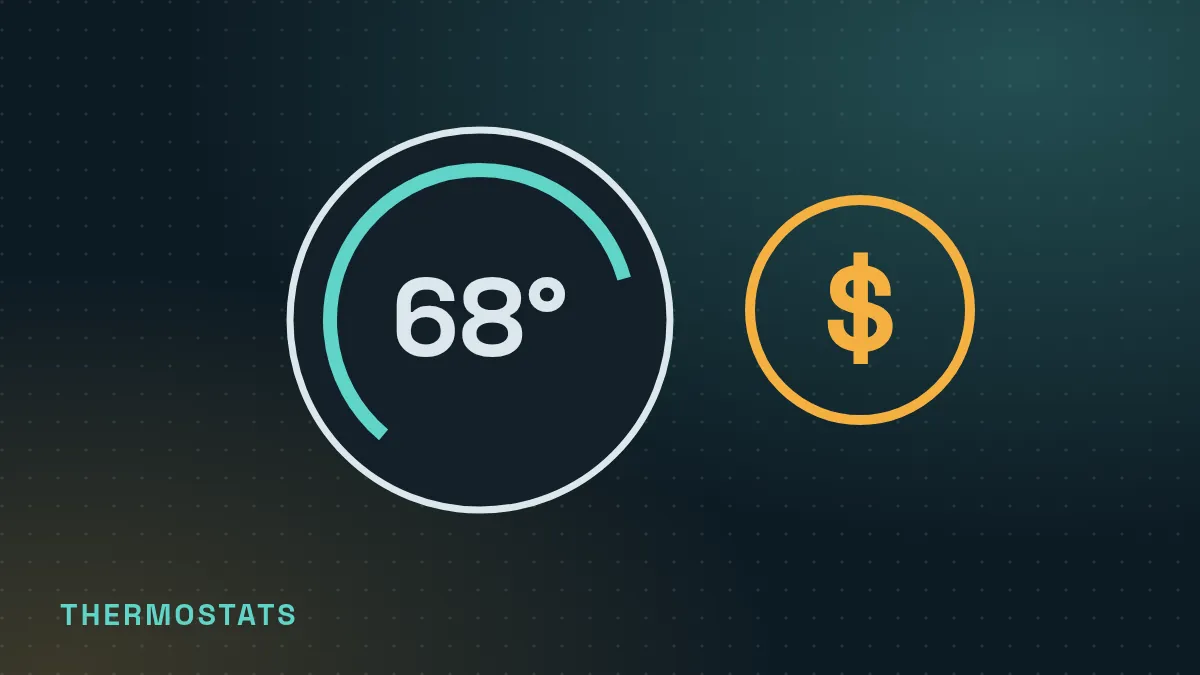
A smart thermostat can save money, but only by helping you heat and cool less: lowering the temperature while you sleep or are away. ENERGY STAR estimates that certified smart thermostats save about 8 percent on heating and cooling bills on average. If you already keep a steady schedule on a programmable thermostat, savings may be small.
This guide is research-based, drawing on the U.S. Department of Energy (DOE), ENERGY STAR and thermostat installation guides. Savings depend heavily on your climate, home and habits, so treat every number here as an estimate.
What the official numbers say
- ENERGY STAR: certified smart thermostats saved users about 8 percent on heating and cooling bills on average, based on field data the program requires for certification.
- DOE Energy Saver: you can save as much as 10 percent a year on heating and cooling by turning your thermostat back 7 to 10 degrees Fahrenheit for 8 hours a day from its normal setting.
Neither number is a guarantee. They're averages, and the savings come from setbacks (lower heat or higher cooling setpoints while you're asleep or out), not from the device itself.
Where the savings come from
- Schedules you actually keep. Many people own programmable thermostats but never program them. A smart thermostat's app makes schedules easier.
- Away detection. Some use your phone's location or occupancy sensors to set back automatically when everyone leaves.
- Usage reports. Seeing runtime history can change habits.
- Utility programs. Some utilities offer rebates on qualifying thermostats or pay you to let them adjust your thermostat slightly during peak demand. Check your utility's website.
When it won't save much
- You already set back the temperature with a programmable thermostat.
- Someone is home all day and prefers a steady temperature.
- You don't pay for heating and cooling (common in some rentals).
- Your system isn't a good fit, for example line-voltage electric baseboard heat, which needs a special line-voltage thermostat, not a typical low-voltage smart thermostat.
Check compatibility before buying
- Wiring: most smart thermostats need a C-wire (common wire) for steady power, or a manufacturer-supplied adapter. Take a photo of your current thermostat's wiring before you buy.
- System type: check the maker's compatibility checker for heat pumps, multi-stage systems, boilers and dual-fuel setups.
- Renters: a thermostat is part of the building's system. Ask your landlord, keep the old one and reinstall it when you move. If you can't swap it, see the climate ideas in our renter-friendly guide.
- Safety: turn off power to the HVAC system at the breaker before touching wiring, and hire an HVAC technician if unsure.
Estimate your own savings
A simple estimate: take your yearly heating and cooling cost and multiply by a realistic percentage.
| Yearly heating + cooling cost | At 5% | At 8% (ENERGY STAR average) | At 10% |
|---|---|---|---|
| $600 | $30 | $48 | $60 |
| $1,000 | $50 | $80 | $100 |
| $1,500 | $75 | $120 | $150 |
Divide the thermostat's price (minus any utility rebate) by the yearly savings to get a rough payback period in years. Your heating and cooling share of the bill is often visible in utility usage charts by comparing mild months with peak months.
For plug-in devices like window fans or a window AC, use our Smart Plug Savings Calculator instead.
Frequently asked questions
How much does a smart thermostat save per year?
ENERGY STAR estimates about 8 percent of heating and cooling costs on average for certified models. The actual amount depends on your climate, energy prices, home and how much you set back the temperature.
Does turning the heat down at night really save energy?
Yes. The DOE says a lower temperature means the home loses heat more slowly, so the system uses less energy overall, even counting the warm-up in the morning. Heat pumps can be an exception with some setbacks, so follow the maker's guidance.
Can renters install a smart thermostat?
Only with the landlord's permission. Keep the original thermostat and reinstall it when you move out.